
Hello everyone and welcome to a rocking new review! Today, I am going to be looking over the latest musician biopic to hit the big screen. It feels like ever since Bohemian Rhapsody hit it huge back in 2018, that studios have been greenlighting these nonstop with everybody getting this treatment from Elton John to Elvis to even Robbie Williams (arguably the best movie of the bunch imo, but that’s a whole other conversation). Now it is The Boss’s turn to hit the silver screen with Jeremy Allen White taking up that mantle in this telling of how he made his album, Nebraska. Thanks to my family, I have listened to a lot of Bruce Springsteen in my life and I really dig his music a lot, finding it easy to see why he is as influential as he is. It was only inevitable that he would end up being the subject of a biopic like this and I’ll admit that I tend to be very critical of these kinds of movies. I feel in order for them to really work for me, they have to go against the conventional formula that these things usually follow, have a unique style to them, or present the subject in an interesting light. Was Springsteen able to hit these notes? Let’s jump right in and see if this movie was born to run!
Set in 1981, we follow Bruce Springsteen as he reaches the end of a very successful concert tour, but ready to try something new as far as his music goes. So, his manager, Jon Landau rents a house near Freehold, New Jersey, the town in which he grew up so he can lie low for a bit. While there, he becomes inspired to prepare a demo filled with songs that speak to him personally, even with pressure from the studio to make another huge album. Inspired by his past life and him living in his own hometown, Bruce is committed to making this set of songs possible in the way he sees fit and we get to see the process of how Nebraska came to be.
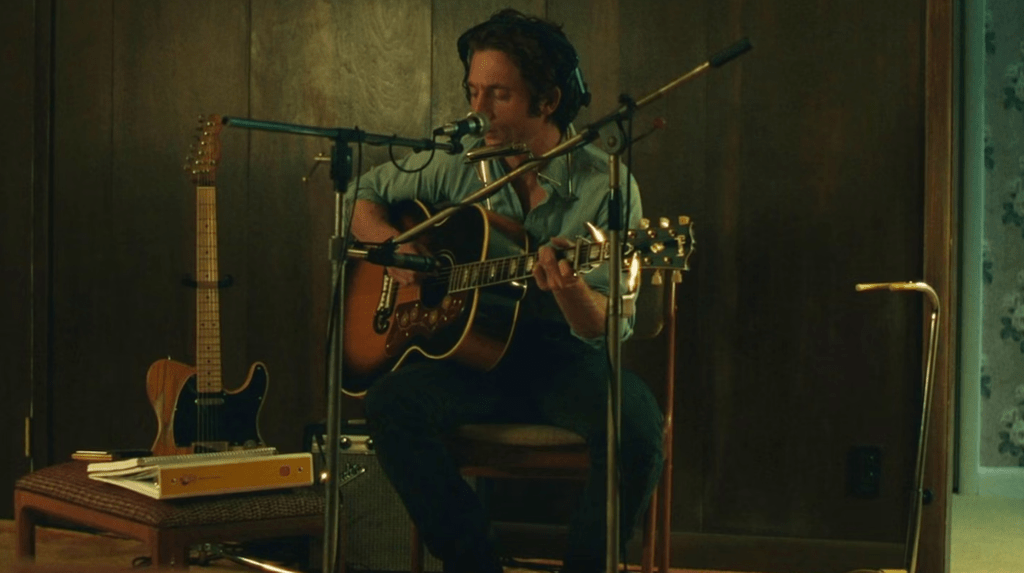
If the music biopic has become known for being an excuse to play all of the greatest hits like the audience is at some sort of concert, then it is amusing to the extent Deliver Me From Nowhere aggressively tries to avoid becoming that. This is a film where Bruce Springsteen hears his hit song, Hungry Heart, playing on the radio and immediately turns it off, which is a perfect indicator of the kind of biopic we’re dealing with here. Instead, Scott Cooper is trying to go for a more introspective examination of this moment in Bruce’s life, with him making an artistically fulfilling, but not quite commercial album that bucks a lot of conventional trends. For the most part, this approach worked for me as I found Cooper’s way of letting the audience breathe in moments with the characters to be compelling with plenty of interesting insight into why Bruce is the man he is. There are plenty of moments of contemplation that also serve to get us into Bruce’s mindset when making his music and while this is not handled in some new way, I do like how this film focuses on that more so than other biopics as well as the technical aspects of making this sort of experimental album, as I feel the film does a good job informing why Nebraska was as risky as it was and why there was much concern in the industry circle for why Bruce was doing this. Also dives into the idea of an artist wanting to use their art to reflect themselves and find peace with whatever struggles they have/are facing and here is where I think the movie is at its most compelling.
There is a lot of exploration into Springsteen’s depression and how he has this mentality that he doesn’t deserve happiness and that he drives everything away from him, for fear of hurting anyone. We see the toll takes on him and I think this is powerfully done as Cooper takes the time to properly develop all of this with thoughtfully written conversations tackling these themes head on and helping us understand this artist at the top of their game dealing with such internal struggles. It all leads to a very poignant finale that again so goes against what people would want from a movie like this, that I can’t help but admire the audacity. Now I do wish the film would’ve explored certain things a bit more, in particular that struggle between making art and making that very art commercial as I find that to be an fascinating conflict in general that I would’ve liked to have seen Cooper dig into that a bit more. This is also a movie that, not dissimilar to The Smashing Machine, is comparatively light on much plot and instead more of a lazy river movie where we just witness The Boss doing his thing, though I found this more consistently investing than that (still pretty good) wrestling drama even if both aren’t exactly the most cinematic subject matter. Plus, I do think certain plot elements do get dropped suddenly by the time we wrap things up in order to focus on other aspects, which makes the proceedings feel uneven when looked at as a whole.
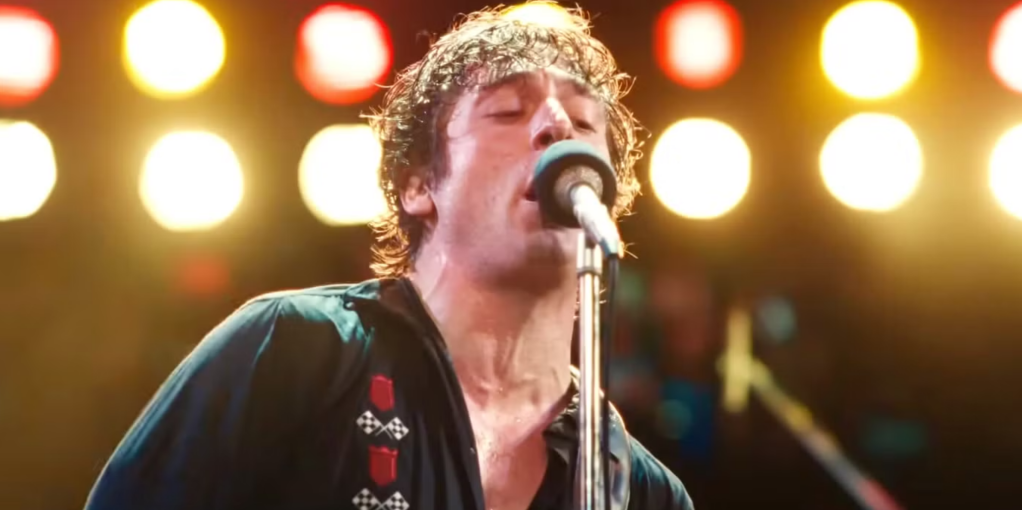
Given the overall tone, Cooper opts for a much more calm approach when it comes to telling this story, not going for the flashiness that is often present in other music biopics. He takes advantage of this small scale in order to really hone in on the characters and get us into their headspace, just letting his the performances and dialogue speak for themselves and the drama is more investing because of it. Helping is that this is a very well shot movie courtesy of Masanobu Takayanagi that is able to aid in enhancing certain locations such as Bruce’s isolated home in the woods or the bustling nature of the city or boardwalk. Him and Cooper also do a solid job in framing specific shots to get across some thematic intentions such as long shots of Bruce wandering by himself or close ups when he’s with his love interest or having some sort of break down. Even some good utilization of black and white during the flashback scenes to his past that are often well placed to give one a better understanding of his background. There is a lot jumping between plot threads that do add to the uneven feel, and there are times where I wondered if certain angles were intended to be elaborated on in another cut, but by the end of it, most everything came together quite nicely. Also, while there aren’t too many big music performances, the ones we do get hit hard whether it is old favorites like “Born to Run” or “Born in the USA” (the latter is perfectly presented here in one of its earlier forms) or a lot of the quieter stuff in his Nebraska album, which as someone who wasn’t too familiar with it beforehand, is powerful stuff I might add.
Ever since coming on to the scene with his lead role in The Bear, Jeremy Allen White has become one of the more prolific young stars as of late, so it is only natural that he would be given a big starring vehicle like this. He is able to serve his talents very well as he gives an exceptional performance as the iconic musician that helps in carrying the movie. He is able to successfully showcase a more personal side to Bruce that encompasses his qualities (calm, willing to listen to people, etc.) as well as his flaws (insecure, stubborn, etc.) in a way where one can see all of it coming from this guy. He grasps the role of a troubled artist excellently, with his facial expressions often doing some heavy lifting in how he is able to bring Bruce’s inner demons to the surface where one can see something troubles him deeply and music is his way of facing it. There are many wordless moments where White is just staring off somewhere and one can tell what he is thinking of, just by the way he looks. It all comes to a head by the end where he finally lets everything all out in emotionally powerful scenes of vulnerability that not every actor can convincingly do, but White is up to the challenge and he very much succeeds.
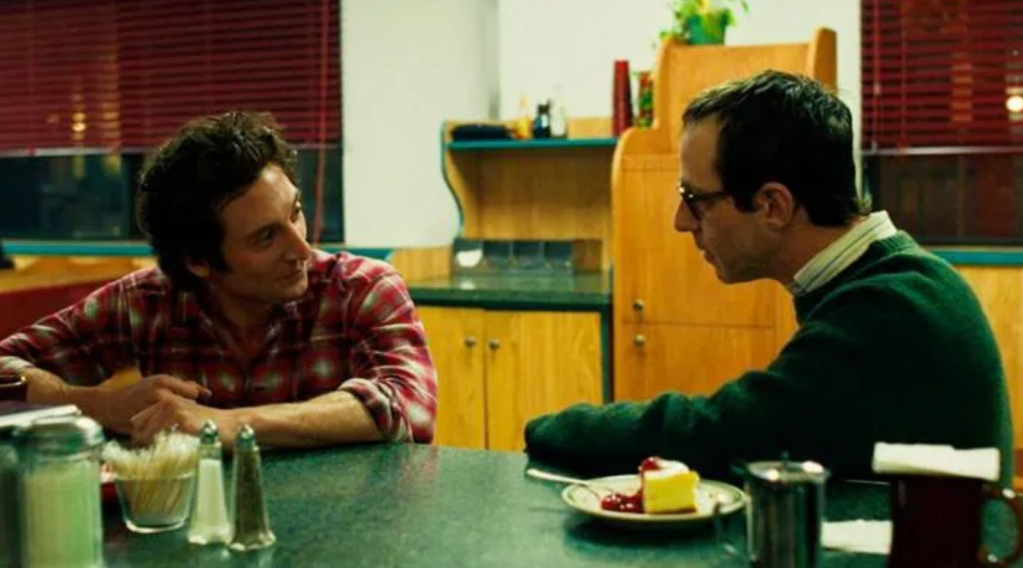
The movie also manages to explore some of the key relationships in Bruce’s life in a way that I thought was well told too. The most prominent one is with Jon Landau, with Jeremy Strong providing very strong (pun initially not intended, but I’m sticking with it) supporting work, portraying the man’s calm and collected way of doing his job well. His working dynamic and friendship with Bruce is well established as one can sense the trust they have in one another and I liked how Landau is shown to be someone who tries to keep in mind both the commerce and artful sides of music, supporting and understanding Bruce’s decisions while also trying to keep a realistic mentality towards everything that is going on. Strong delivers some well written monologues that do the job in getting across all of this and it is somewhat refreshing that Landau seemed to have the best interests of his client in mind and supported his experiments here (given his background as a critic, that tracks). I also thought Odessa Young was very good as Bruce’s love interest, Faye, as despite knowing one another for a short time, they hit it off naturally and one ends up sympathizing with Faye’s mixed feelings on getting with someone of Bruce’s personality, wanting to be with him but not understanding his distancing mentality. Plus, while the abusive father figure is a very common trope in these kinds of movies, Stephen Graham, manages to make the most as Douglas Springsteen, painting him in a more complicated light as a deeply troubled man with serious mental issues, but he still cares about his son and wishes he could’ve been a better person (appreciate how upfront the movie is about that). In smaller roles we get plenty of welcome supporting turns with Paul Walter Hauser popping up as the enthusiastic recording engineer, Mike Batlan, to provide some levity that lands and David Krumholtz playing the part of “disgruntled studio executive” in the form of Al Teller to a tee.
In all, I found Springsteen: Deliver Me from Nowhere to be a thoughtful and refreshing musician biopic that manages to stand out from others of its ilk. That doesn’t mean it’s without its issues as it can struggle to gel all of its plot threads together, it isn’t the most cinematic or high stakes story, and there are certain aspects that become overshadowed by the end. However, I like the more introspective look into Springsteen’s life and music, the themes of depression are handled very well, it is a well made and shot picture, Jeremy Allen White is terrific in the lead, and I think the supporting cast provides able work. If one is going to this expecting something akin to Bohemian Rhapsody or even Rocketman or Elvis, then one might be disappointed as this is going for a much different approach. However if one is interested in seeing this specific moment in Springsteen’s life portrayed or want some insight into how he made Nebraska, then I can see this being a worthwhile watch. I very much appreciated how Cooper chose to tell this story and I found myself moved by it. As a fan of The Boss, getting to see him portrayed in this life painted him in an even more relatable life and I can see many resonating with it. If we’re going to get the life story of every single musician onscreen, I am glad that we’ve been seeing many color outside the expected lines and I’d say this comfortably joins the good bunch in my book.
Rating: B+
Please leave your thoughts down below in the comments and see you guys later!
 Review Time