
When it comes to Earth Science, it is something that is present in our day to day lives all around the world. We experience it in some way shape or form, mainly through natural environments. However one underrated aspect in which Earth Science can be portrayed is through film. I’ve personally always found it to be such an underrated tool in order to showcase different aspects of life as it can often serve as an introduction for various concepts for many. Now they can indeed be sensationalized as we’ll see with some of the movies we’re about to discuss, but that doesn’t mean there isn’t value in that. So what I’m going to be doing is discussing certain movies that contain examples of Earth science within them and how they relate as well as whether or not they are that accurate as far as what they are trying to portray.
2012
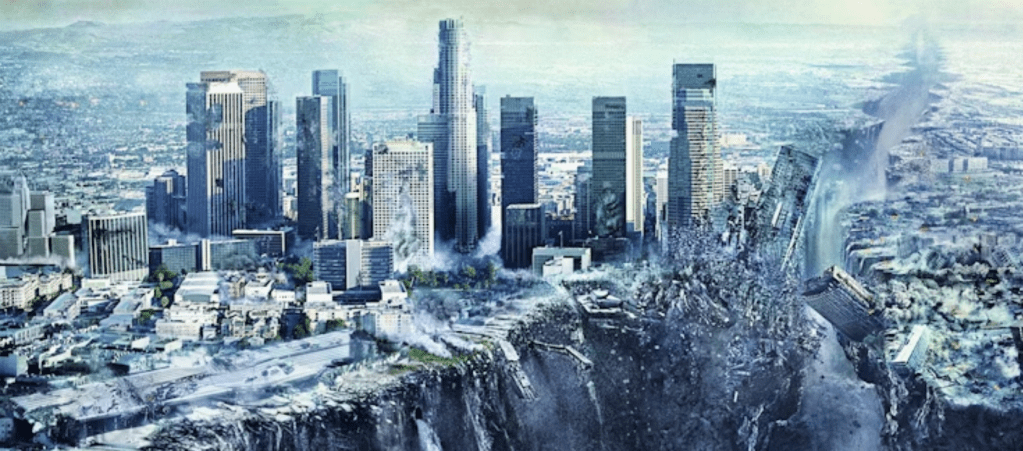
Roland Emmerich is someone who has a knack for helming silly over the top disaster movies and 2012 is no different. It is over the top and has a lot of cheesy moments and bombastic special effects. However it still manages to work, especially when it slows down to take stock of the apocalypse and how it is affecting everyone. It is also a film filled to the brim with various natural disasters such as earthquakes, volcanoes, and mega tsunamis among others. They are shown to be as exaggerated as possible with cracks being formed and pulled away from each other on the ground, giant stratovolcanoes with immense amounts of lava, and giant rogue waves flipping over large cruise ships. There was also the concept of solar storms which are stated to be the main cause of this event, causing radiation to heat the core of the Earth. The flares release something called a neutrino which then goes on to heat the core, causing huge global warming issues. However according to NASA they cannot interact with physical substances so what we see in the movie could not realistically be caused by them. Again, not a huge revelation in regards to scientific accuracy, but the ideas are there nonetheless.
Interstellar
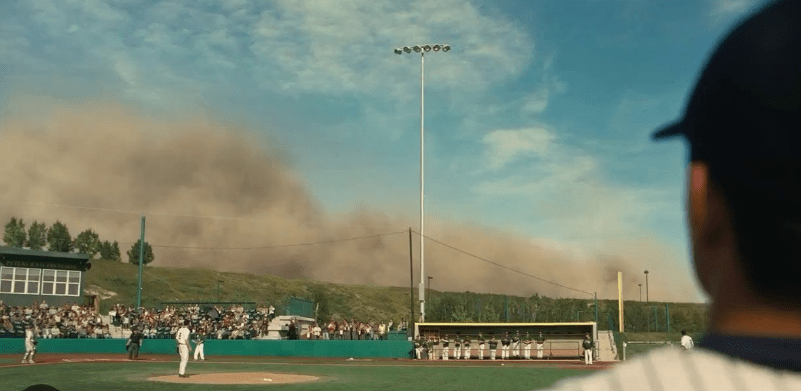
Christopher Nolan’s sci fi odyssey is one that was initially quite divisive back when it came out in late 2014, but it has since gone on to amass a strong following over time with quite a few out these calling it a modern classic of the sci fi genre. I am one of those as I think it is a visually astounding film with so much in terms of compelling emotions and character work. It is also an interesting film in regards to various fields of science, most notably physics and even earth science. There are numerous concepts applied in the film, most notably in what drives our characters to go on their mission, which are dust bowls. These are caused by combinations of severe droughts, poor agricultural practices, and high winds that lead to immense soil erosion. In the film they are the result of severe climate change, showing the effects environmental degradation can have if the planet is not kept in check. It is an interesting way to apply a scientific concept and makes the conflict of the film all the more interesting in the process.
WALL-E

Often considered a classic from Pixar Animation Studios, this animated sci fi film is about a robot in a dystopian future who has an encounter with another robot that ends up changing the course of human history in many ways. There are a lot of interesting themes and concepts that end up being tackled in this film, especially those of Earth Science. This is most present in the Dystopian future where Earth is left nearly uninhabitable thanks to an excessive amount of pollution due to an immense amount of human consumption. This consumption can lead to an immense amount of greenhouse gases that are sent into the atmosphere, which then makes the Earth even warmer than it normally would be. The film is also not afraid to tackle the disastrous effects pollution will have on biodiversity, greatly decreasing it which then disrupts so many ecological systems. I like how the film tackles these subjects in a way in which anyone of any age can understand and it does a fantastic job of promoting sustainable practices and how it is important to maintain a healthy planet.
San Andreas
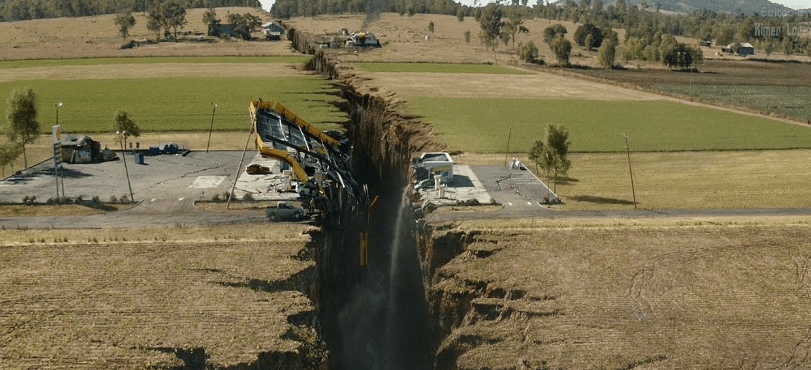
Dwayne Johnson has gained a strong reputation for being a likable leading man in films that are meant to be solid crowd pleasers. San Andreas is no different as it provides all of the hard hitting action and big budget spectacle that one expects from a $150 million film like this. Johnson stars as a rescue helicopter pilot who must find his daughter amidst a magnitude 9 earthquake, the largest in history. Now a magnitude 9 is not scientifically possible, but the San Andreas fault is a real transform fault that is located in California and travels 1,200 km through the state. It is the transform fault that is in between two major Earth crust plates, the one in the Northern Pacific to the south and west, and the one in North America that is to the north and east. It is considered to be among the most active faults in the world, causing a great number of earthquakes and involves movement that involves the plates locking together for a very long time before slipping actually occurs. Is it as deadly as the movie portrays it? Well no, but I can appreciate them mentioning some of the science behind earthquakes in the film for exposition purposes.
The Core
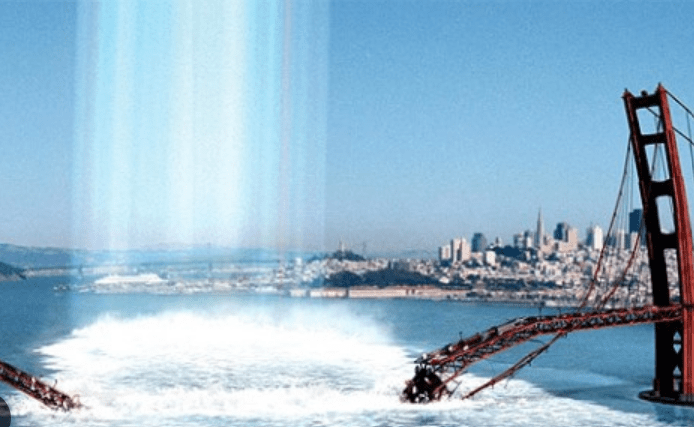
While not a huge hit back when it came out and is another one of these disaster films that didn’t have the greatest reputation, The Core is one movie that got a decent sized following over time that appreciates what it was going for. I feel it works quite well for what it is and it has a pretty interesting elevator pitch when it comes to the basic synopsis. It essentially concerns what would happen if the inner core of the Earth stopped spinning and the kinds of global disasters that would occur. The reason why it is so important that it keeps on spinning is because the core spinning is what helps the magnetic field of the Earth go thanks to the movement of the molten iron that is at the core. When the spinning stops, dangerous effects can occur such as an increase in radiation caused by cosmic rays, disruption in communications, the atmosphere essentially being taken away, and animals being unable to navigate. The likelihood of this happening isn’t high but it makes for a fun What if scenario that provides immense entertainment value.
Armageddon
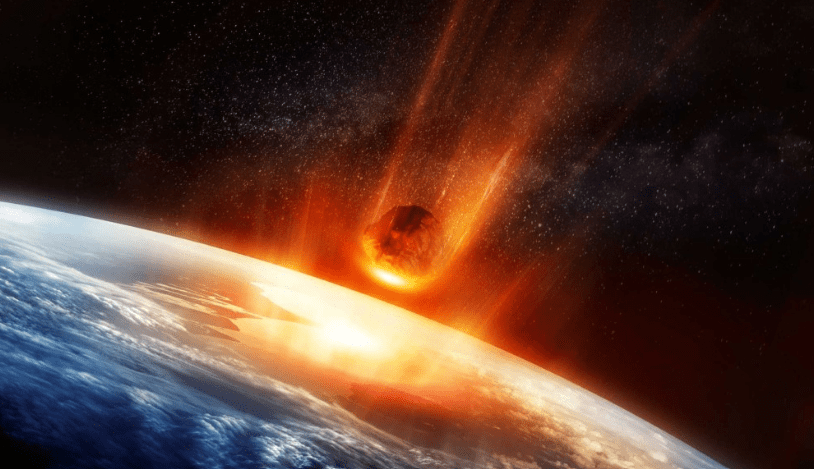
One of two big Asteroid related films that released in the Summer of 1997 (alongside Deep Impact), this Michael Bay directed disaster spectacular has a reputation of being a major guilty pleasure among cinephiles. It is filled with various scenes of ridiculousness, cheesy drama, and numerous plot holes (why not hire the miners to teach the professionally trained astronauts to do the job?). Still like a lot of these crazy disaster movies, there is a certain charm that makes the proceedings hard to resist on an entertainment level. Now the movie may have various scientific inaccuracies that make it hard to analyze from that kind of perspective (around 168 of them to be exact, according to NASA), but there are still interesting ideas in regards to the impact of asteroids. It mentions the efforts that NASA and various organizations have gone through in order to prevent an immense asteroid impact by detecting them early so as to deflect them as soon as possible. The impacts can be very severe if contact between the asteroid and the Earth does occur as it can cause there to be crater formation or tsunamis. There can also be smaller, more local impacts like wildfires. They can also lead to climate change due to the debris that can be sent into the atmosphere which can create various dust clouds that can cover the sun and decrease the temperature. The move itself may not be the sharpest tool in the shed, but it at the very least puts the subject of asteroids on people’s radars which is definitely something.
Sunshine
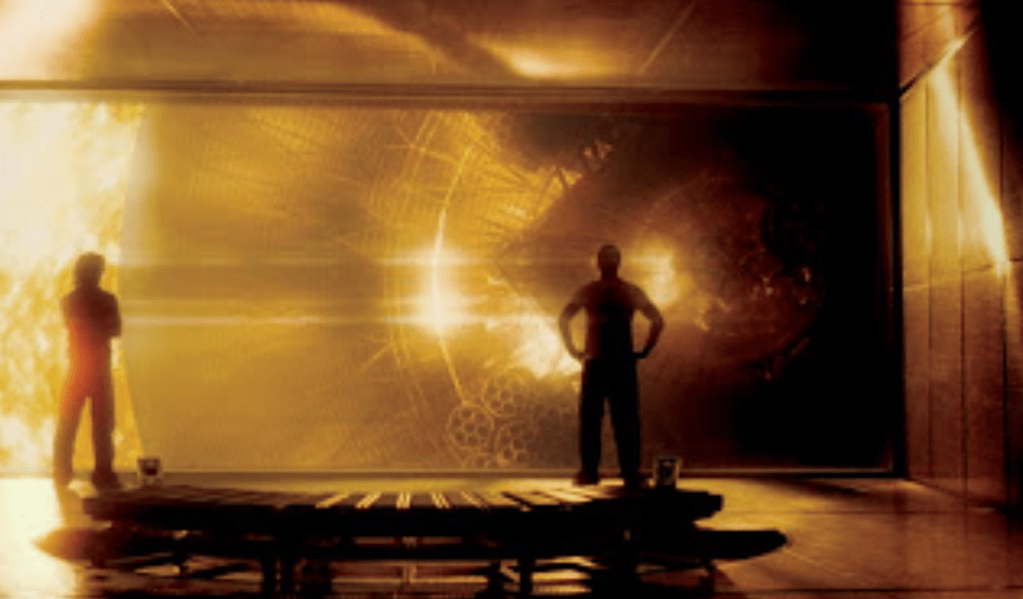
Wanted to end things off with a more obscure pick that was not a hit, but has gotten a solid reputation over time as a good piece of modern sci fi. Starring a young Cillian Murphy, the film concerns a crew of astronauts on a mission to save the Earth by reviving the dying sun and the complications that arise with that assignment. This is also a movie that has its fair share of inaccuracies, but still explores interesting concepts, in particular with the death of the sun. It showcases the Earth freezing which would happen in the scenario when the Sun dies, though not instantly. It would take some time, but the Earth would stop recieving the heat that would allow it to maintain any form of life. The atmosphere would freeze, photosynthesis would fail to occur, and the temperatures would drop significantly among other deadly effects. This is all due to the sun running out of hydrogen which causes it to become a red star that then consumes other planets and becomes a white dwarf star. It then cools down and fades away which then leads to our planet getting affected. This will not happen for billions of years but it is still interesting to wonder and the movie explores these ideas in a compelling way with a lot of cool sci fi flourishes thrown in for good measure. Definitely an overlooked one.
Conclusion:
These are just some of the movies I decided to take a look at. Earth science is something that is present in many different ways through many different kinds of films whether they are fantastical, silly, serious, or thought provoking. It shows what film is capable in terms of portraying these ideas and natural parts of our planet, even if it is an exaggerated manner. Still that may make people want to look more into these topics and further explore the ways in which they actually function, so in a way it may be a necessary way to create new Earth scientists. It lends itself to the cinematic artform naturally and its used in many films exemplifies the way the medium can be used as tools to teach in ways that inspire.
 Review Time